
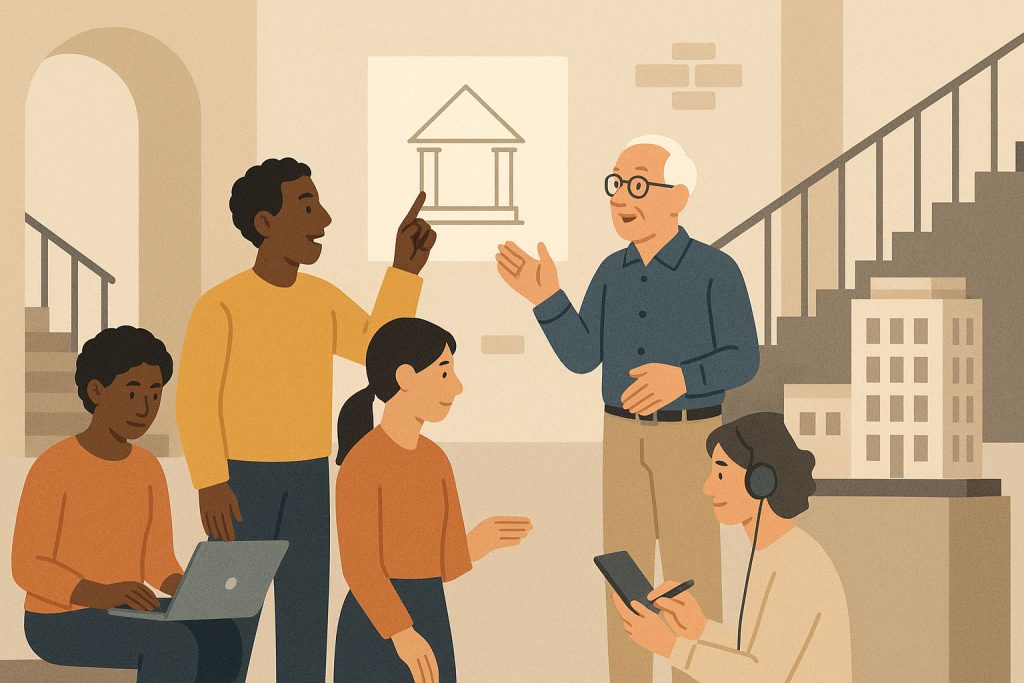
Cultural spaces — such as museums, galleries, community centers, and libraries — are not just vessels for programs and exhibitions. They are environments where people engage with heritage, ideas, and each other. In this context, human-centered design (HCD) becomes critical, ensuring that architectural spaces are not only functional and aesthetic, but also inclusive, accessible, and emotionally resonant.
At Ahmadreza Sahami Studio, we believe that cultural architecture should be grounded in empathy — shaped around how people feel, move, gather, and connect.
1. What Is Human-Centered Design?
Human-centered design is an approach that begins with users — their behaviors, emotions, and needs — and creates solutions tailored to enhance their experience.
In cultural architecture, this means:
- Designing intuitive circulation
- Incorporating sensory variation (light, texture, sound)
- Encouraging interaction and curiosity
- Adapting to diverse user profiles: elders, children, tourists, locals, etc.
2. Core Principles of Human-Centered Cultural Design
a. Accessibility and Inclusivity
Entrances, paths, signage, and facilities must welcome users of all physical abilities and cultural backgrounds. This includes:
- Step-free access
- Multilingual wayfinding
- Adjustable lighting or tactile surfaces for the visually impaired
b. Emotional Engagement
Architecture should evoke a sense of awe, calm, or curiosity. Design tools include:
- Play of light and shadow
- Spatial contrast between compression and openness
- Use of local materials and colors that invoke memory
c. Social Connectivity
Cultural centers must encourage gathering, conversation, and interaction — both planned and spontaneous.
Spaces like:
- Courtyards
- Shaded thresholds
- Seating clusters
- Semi-public platforms
…invite people to linger and connect.
d. Flexibility and Multi-functionality
Exhibitions change. Communities evolve. A cultural space should accommodate:
- Workshops
- Performances
- Lectures
- Informal gatherings
…often in the same location.
3. Case Study: Designing a Cultural Hub in Yazd
In one of our recent projects in Yazd, we were tasked with converting a historic caravanserai into a public cultural center.
The design strategy included:
- Preserving the spatial rhythm of the traditional structure
- Introducing a climate-sensitive glass enclosure with visual permeability
- Incorporating furniture and shading elements built by local craftsmen
- Adding a children’s play zone subtly integrated into the courtyard garden
The result was a space that resonated with the neighborhood, offering cultural participation without intimidation.
4. Cultural Context Matters
Human-centered design is never one-size-fits-all. In Iran, architectural gestures carry symbolic weight — a portal, a dome, or a water basin is more than a feature; it holds collective meaning.
By understanding the cultural psyche of users, we ensure that space becomes a canvas for shared memory, not just an envelope for programming.
Conclusion
Cultural spaces are powerful agents of change — but only when people feel they belong in them. Human-centered design bridges the gap between intention and experience, ensuring that architecture resonates as much as it functions.
At Ahmadreza Sahami Studio, we place human experience at the core of cultural design — because people don’t just visit buildings; they feel them.